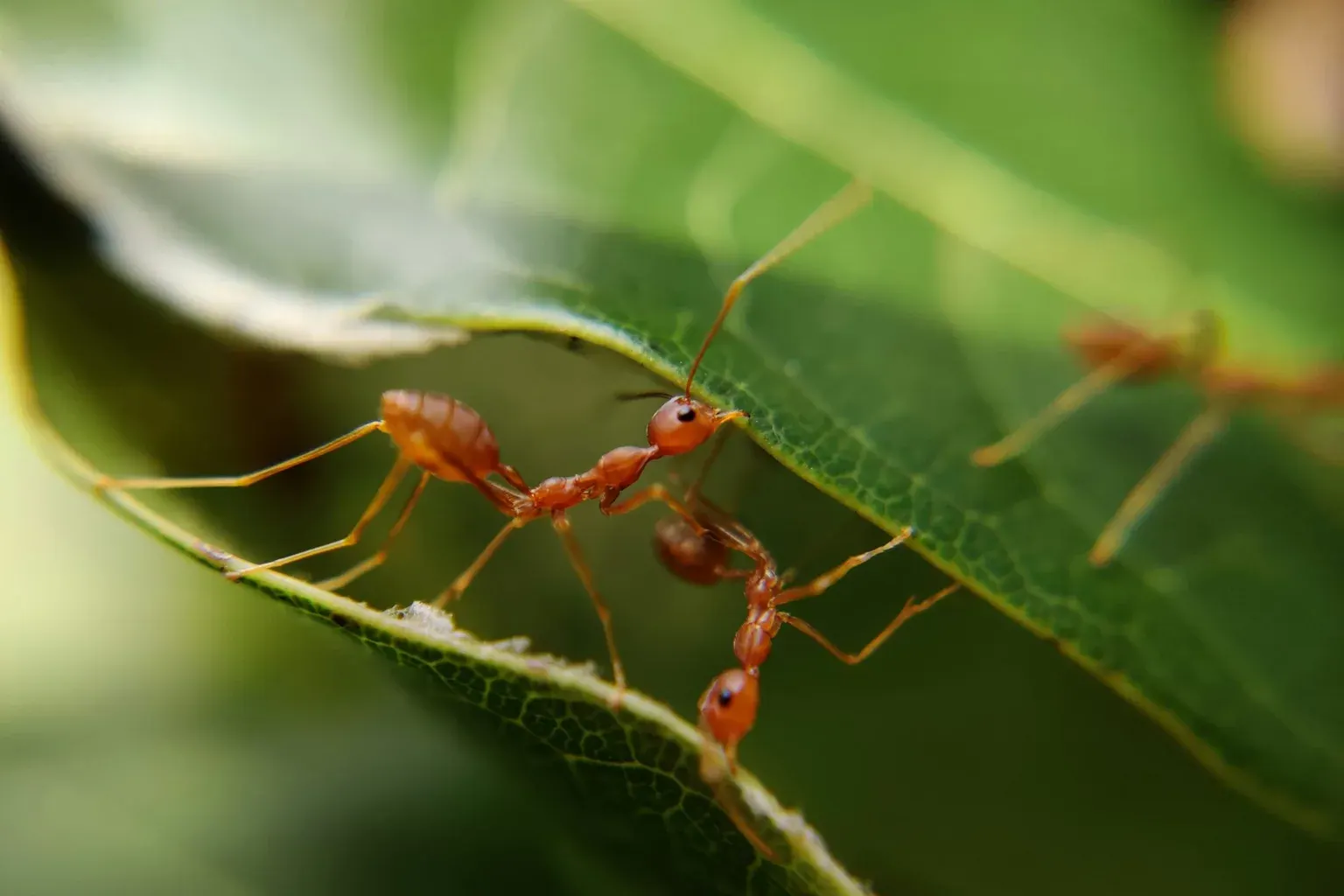
For New York City apartments, brownstones and houses. We identify the ant, trace where it enters and treat the colony instead of the ants you see.
ANTS IN YOUR HOME? THE SPECIES SETS THE PLAN.
Ants that look alike can need very different treatment.
Pavement ants nest in sidewalk cracks, foundations and building voids and are common in ground-floor and basement units. Odorous house ants form large colonies, often with several nests, and follow plumbing and walls to kitchens. Carpenter ants are larger and nest in damp or damaged wood, so seeing them can point to a moisture problem. Pharaoh ants are tiny, nest inside walls and are hard to clear without a careful baiting plan.
Ants you see on the counter are workers sent out for food. The colony is elsewhere, sometimes in a neighboring unit or a shared wall. We identify the species first, because the wrong product can scatter a colony and make the problem larger.
WHERE WE SEE ANTS IN NYC.
In Manhattan and Brooklyn apartment buildings, pavement and odorous house ants usually come in along pipes, cracks and shared walls, looking for kitchens. In Queens and Staten Island houses with wood, yards and mulch beds, carpenter ants and larger outdoor colonies are more often the concern, and damp or decaying wood is worth checking.
Each visit has a clear job, from finding the entry point to confirming the ants have stopped.
STEP 01
INSPECT & TRACE
We collect a sample to identify the species, then trace trails to entry points along windows, pipes, baseboards and outlets, and check for moisture and damaged wood.
Tell us where and when you see ants and what they are feeding on.
STEP 02
BAIT & TREAT
We place baits matched to what the ants are eating, apply targeted treatments to nests and voids we can reach, and avoid spraying trails that would split the colony.
You receive written instructions on what to leave in place.
STEP 03
FOLLOW UP & SEAL
We check bait take and activity, adjust placements and recommend sealing entry points and fixing moisture so the problem does not return.
Bait activity often rises before it falls, which is expected.
TARGET THE COLONY. CHOOSE THE APPROACH.
Most ant work uses baits first. The inspection decides what else is needed.
01
Slow-acting baits
Foraging ants carry slow-acting bait back to the nest and share it, which reaches the queens and brood that a contact spray never touches. We match sugar, protein or grease baits to what the ants currently want.
Ants may crowd the bait for days. That is a sign it is working, so please do not wipe the trail.
02
Nest and void treatment
When we can find a nest in a wall void, under a floor or in damaged wood, we treat it directly with a targeted product used according to its label, often with a dust or foam that reaches the gallery.
Carpenter ant nests may need moisture repair or removal of damaged wood to resolve.
03
Sealing and moisture control
Caulking along windows, baseboards and pipe penetrations limits how ants enter. Fixing leaks and damp cabinets removes the conditions carpenter ants and many other species favor.
KNOW THE SIGNS. WHAT ANT ACTIVITY LOOKS LIKE.
The pattern of activity helps us find where the colony is.
Trails along edges
Lines of ants along baseboards, countertop edges, window frames and pipes show a route between the nest and food.
Winged ants indoors
Winged ants (swarmers) inside the home usually mean a mature colony nearby, sometimes in the building structure.
Wood shavings
Fine sawdust-like frass below baseboards, window frames or door trim can indicate carpenter ants working in wood.
Damp, damaged areas
Ants around leaking pipes, bathtub edges or soft wood suggest moisture is part of the problem.
YOUR PART. BEFORE AND AFTER THE VISIT.
Small habits make baits work and keep ants from returning.
Leave the trails alone
Do not spray or wipe heavily used trails before we arrive. We need ants to find and carry the bait.
Remove competing food
Store sweets, pet food and pantry items in sealed containers and clean up crumbs and spills so the bait is the best food on offer.
Report moisture
Tell your landlord or building management about leaks and damp spots, and note where you see ants near them.
Keep a note of activity
Write down where and when ants appear for a few days. It shows us whether the colony is shrinking.
YOUR QUESTIONS. CLEAR ANSWERS.
Why did I see more ants after the bait went down?
Ants discover bait quickly and recruit nest mates to it, so activity can rise for a few days. That is the colony taking the bait home. Spraying over it can stop the process and leave the colony in place.
Are carpenter ants eating my wood?
Carpenter ants excavate wood to make nests but do not eat it. They are usually found in wood that is or has been damp. We look for the nest and the moisture source, and may recommend a repair by building management or a contractor.
Can ants come from a neighboring apartment?
Yes. Ants travel along shared walls, pipes and wiring. If the inspection suggests a source outside your unit, we recommend coordinating with building management so the colony is treated rather than relocated.
Are baits safe around pets and children?
Ant baits are used in small amounts and placed in cracks, behind appliances or in tamper-resistant stations according to the label. Tell us about children and pets, and we will choose placements out of reach.
How long does ant control take?
Light pavement or odorous house ant activity often settles within a couple of visits. Pharaoh ants and large carpenter ant colonies can take longer, and we explain the schedule after the inspection.
READY FOR THE VISIT? START HERE.
A little information helps us plan the assessment. Before treatment, we will give you preparation instructions for your home.
Describe the ants
Share the size, color, where you see them and whether any have wings. A photo of a few ants helps with identification.
Note where they come from
Mention windows, outlets, pipes or cabinets where they appear, and any leaks nearby.
Hold off on sprays
Store-bought sprays can scatter a colony and spoil bait. Ask us before applying anything.