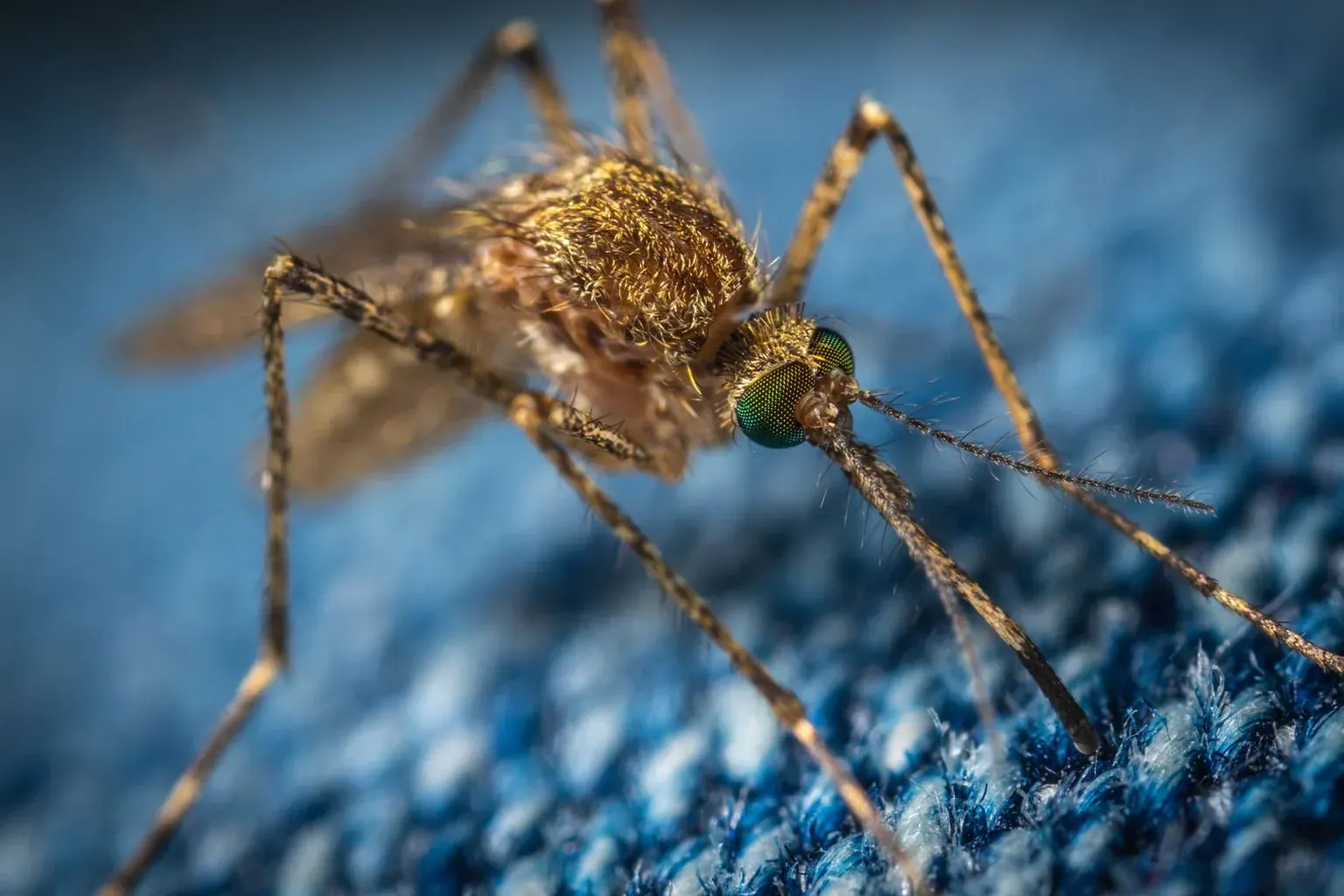
For New York City backyards, gardens, terraces and rooftops. A seasonal plan built around where mosquitoes breed and where adults rest.
MOSQUITOES OUTDOORS? START WITH THE WATER.
Every mosquito begins in standing water, often closer to your door than you expect.
Mosquitoes lay eggs on or near still water, and the larvae develop there over several days. In New York City the breeding sites are usually small: a clogged gutter, a saucer under a planter, a tarp with a sag in it, a rain barrel without a screen, or a catch basin that holds water between storms.
Adults rest during the day in cool, shaded, humid spots such as dense shrubs, ivy, under decks and along fences, then come out to feed at dusk and after dark. Because they travel from neighboring yards and rooftops too, a good plan reduces what you control and treats the places where adults gather.
WHERE WE SEE MOSQUITOES IN NYC.
Properties near parks, wetlands, creeks and the waterfront tend to see more mosquitoes, which describes much of Staten Island, southern and eastern Queens and parts of Brooklyn and the Bronx. In Manhattan the concern is more often rooftop gardens, planters, drains and neglected standing water.
We work from the water outward, then treat the foliage where adults settle.
STEP 01
SURVEY THE SITE
We walk the yard, garden, terrace or roof, noting standing water, drainage, shade, dense planting and where you spend evenings.
Tell us when and where you notice bites so we can focus on those areas.
STEP 02
REDUCE & TREAT
We help you remove or drain breeding sites, apply larvicide where water cannot be removed, and treat resting vegetation according to the product label.
You receive guidance on how long to keep children, pets and furniture away from treated plants.
STEP 03
FOLLOW UP THROUGH THE SEASON
Mosquito pressure changes with rain and heat. We recheck sites, replace larvicide where needed and adjust the plan.
New water sources after storms are the most common reason activity returns.
TARGET THE PROBLEM. CHOOSE THE APPROACH.
Source reduction comes first. Treatments fill in where water and shade cannot be removed.
01
Source reduction
Draining and flipping containers, clearing gutters and downspouts, adjusting sagging covers and screening rain barrels. Removing the water ends breeding without any product at all.
Most of this work is simple weekly habits we show you how to keep.
02
Larvicide for water that must stay
Biological or growth-regulating larvicides placed in ponds, rain barrels, drains and low spots that cannot be emptied. They act on larvae in the water and are applied per the label.
Rooftop drains, planters and green-roof edges are common candidates.
03
Resting-area and barrier treatment
A targeted application to shaded foliage, fence lines and under-deck areas where adults rest, which reduces the number of biting adults in the space for a period of time.
Applications are scheduled around blooming plants so pollinators are protected.
KNOW THE SIGNS. WHERE MOSQUITOES GATHER.
Signs are easier to find at breeding sites than on biting adults.
Wriggling larvae in water
Small, dark, jerking larvae near the surface of water that has stood for several days, including saucers, buckets and bird baths.
Bites at dusk or in the shade
Bites concentrated on ankles and arms in the evening, or when you sit near dense plantings, point to a nearby resting area.
Clouds when you brush foliage
Disturbing ivy, hedges or the underside of a deck sends adults flying up, which shows where they rest.
Water that never drains
Clogged gutters, flat roof depressions, low patches in a lawn and uncovered containers hold water after every rain.
YOUR PART. BEFORE AND BETWEEN VISITS.
The drier the space, the less treatment it needs.
Empty water weekly
Dump and scrub buckets, saucers, toys and pet bowls once a week so eggs cannot complete development.
Keep drains and gutters flowing
Clear leaves from gutters, roof drains and downspouts, and report persistent ponding on a roof to building management.
Cover or screen
Use tight lids or fine mesh on rain barrels and cisterns, and pull tarps taut so they do not hold pools.
Trim and thin
Cut back overgrown shrubs and ivy so adult mosquitoes have fewer cool, humid places to rest.
YOUR QUESTIONS. CLEAR ANSWERS.
Why do I have mosquitoes on a rooftop or terrace?
Rooftops collect water in planters, drain basins, low spots in the membrane and under equipment, and they are exposed to wind that carries adults up from yards below. The survey looks for these sites first.
Can mosquitoes be eliminated from the yard completely?
Not realistically. Mosquitoes arrive from neighboring properties and public spaces. A plan reduces breeding on your property and the number of adults resting there, and follow-up visits adjust to the weather.
Is the treatment safe for pets, children and pollinators?
Products are selected and applied according to their labels and to the plants and water on site. We schedule resting-area treatment away from open blooms and tell you how long to keep people and pets off treated surfaces.
Do I need a treatment if I only have a small balcony?
Often source reduction on the balcony and the planters is enough. If the problem is coming from a neighboring space, we explain what can be done from your side.
When does mosquito season start and end in New York City?
Activity follows temperature and rain, generally beginning in late spring and continuing through early fall. We tailor the visit schedule to when you use the space.
Does the city spray for mosquitoes near me?
The Health Department monitors for West Nile virus and treats catch basins, marshes and other public areas when needed, and it announces spraying in advance. That work does not cover private yards, and the Health Code requires owners and occupants to keep their own property free of standing water, which is where our visit starts.
READY FOR THE VISIT? START HERE.
A little information helps us plan the survey. Before treatment, we give you preparation instructions for your outdoor space.
Describe the space
Tell us whether it is a yard, garden, terrace or roof, how large it is and where you spend evenings.
Note the water
Mention rain barrels, ponds, planters, drains or any spot where water stays after rain.
Share your concerns
Let us know about pets, children, vegetable gardens or pollinator plants so we can plan the products and timing.