Wood-frame homes in Staten Island, Queens and Brooklyn.
For New York City houses, brownstones and low-rise buildings. A plan built around where termites enter, feed and travel.
TERMITES IN YOUR BUILDING? WORK OUT HOW THEY GET IN.
Termites feed out of sight, so the first sign is often a swarm or a mud tube, not the damage.
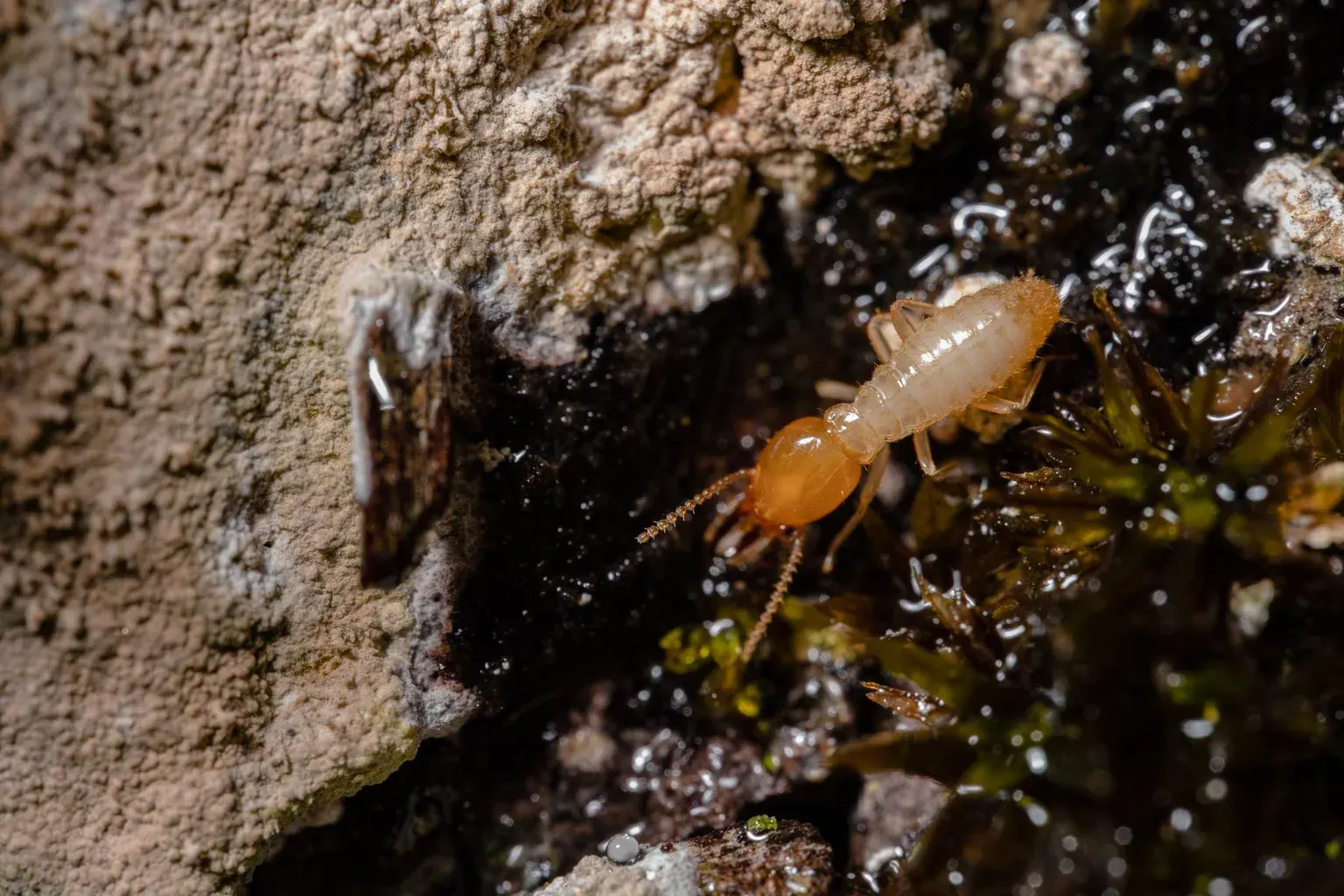
The termites found in New York City are subterranean termites. They live in colonies in the soil and travel to wood through protected mud tubes or hidden cracks. They are drawn to moisture and to wood in contact with soil, such as framing, porch posts, sills, joists and wood close to a leaking pipe or a damp basement wall.
They affect houses, brownstones and low-rise buildings and sometimes reach upper floors through wall voids and pipe chases. Because feeding is hidden and slow, a thorough inspection is the only reliable way to know whether there is activity.
WHERE WE SEE TERMITES IN NYC.
Subterranean termites are found across the city, but the exposure is greatest where there is wood in contact with soil: detached and semi-detached homes on Staten Island and in Queens, and wood-frame and rowhouse construction in Brooklyn. Moisture, mulch and wood-to-soil contact are the conditions we check first.
Findings decide the treatment. We do not recommend one before we see the building.
STEP 01
INSPECT & IDENTIFY
We inspect the foundation, basement, sills, joists, crawl spaces, wood-to-soil contact, plumbing penetrations, porches and exterior wood, looking for mud tubes, damaged wood, swarmer wings and moisture.
Tell us where you saw swarmers, damaged wood or mud.
STEP 02
TREAT & PROTECT
We propose a liquid soil treatment, a bait system, or a combination, plus recommended repairs and moisture changes.
You receive a written plan that explains the areas covered and what we ask you to do.
STEP 03
MONITOR & FOLLOW UP
We check stations, treated areas and the activity found before, and adjust the plan or the monitoring if signs continue.
Termite work is measured over seasons, not days.
TARGET THE PROBLEM. CHOOSE THE APPROACH.
Liquid and bait systems solve the same problem in different ways. The structure and site decide which.
01
Liquid soil treatment
A labeled termiticide applied in a continuous band in the soil around and beneath the structure, creating a treated zone termites have to cross. Used where the foundation and access allow.
Slab, foundation type and access affect how it is applied.
02
Bait and monitoring systems
Stations installed around the building and checked on a schedule. When termites find them, they feed on bait and carry it back to the colony. Useful where drilling or liquid application is limited.
Station checks continue until activity stops, then monitoring continues.
03
Moisture and wood-to-soil correction
Repairing leaks, improving drainage and ventilation, removing cellulose debris and separating wood from soil removes what draws termites.
This work may involve a contractor or building management.
KNOW THE SIGNS. WHAT TO LOOK FOR.
Termite evidence is often small. Take photographs and do not disturb it.
Mud tubes
Pencil-width tunnels of soil on foundation walls, piers, joists or pipes, leading from the ground to wood.
Swarmers and shed wings
Winged insects indoors in spring, or piles of translucent wings on window sills and near lights. Swarmers have equal-length wings and straight antennae, unlike flying ants.
Damaged or hollow wood
Wood that sounds hollow when tapped, or blistered paint and sagging floors near damp areas.
Moisture and soil contact
Wood touching soil, damp basements, leaking pipes and cellar window wells that give termites a route in.
YOUR PART. BEFORE AND AFTER THE VISIT.
A few preparations let the inspection and treatment reach the areas that matter.
Clear access
Move storage away from basement walls, sills, crawl-space entries and exterior foundation edges.
Keep what you found
Save swarmers, wings or wood fragments in a sealed bag or container and photograph mud tubes before cleaning.
Fix moisture
Report leaks to building management or repair them, and keep gutters and downspouts directing water away from the foundation.
Follow the treatment notes
We explain what to avoid disturbing, such as treated soil or bait stations, and how long to keep pets and children away.
YOUR QUESTIONS. CLEAR ANSWERS.
How do I tell termite swarmers from flying ants?
Termite swarmers have a thick waist, straight antennae and two pairs of wings of equal length. Flying ants have a pinched waist, bent antennae and front wings longer than the back wings. Save one and we will help identify it.
Do termites affect apartment buildings?
They can, especially older, low-rise buildings with wood framing, basements or ground-floor wood in contact with soil. They may reach upper floors through wall voids and pipe chases.
How long does treatment take?
The initial application can take a day or more, depending on the structure. The monitoring and follow-up part runs for months, because termite activity declines gradually.
Can I treat termites myself?
Store-bought sprays kill the insects they touch but rarely reach the colony in the soil, and they can push termites to a new route into the building. A professional inspection and plan are the safer starting point.
How often should termites be rechecked?
After treatment, annual inspection is common, along with regular station checks if bait systems are used. We tell you the schedule that fits your building.
READY FOR THE INSPECTION? START HERE.
A little information helps us plan the visit. Before treatment, we give you preparation instructions for your property.
Describe what you found
Share where you saw swarmers, mud tubes or damaged wood and when it happened, with photos if possible.
Describe the building
Tell us the building type, age, whether there is a basement or crawl space and any known moisture.
Do not disturb activity
Avoid breaking mud tubes or spraying them. Leave them for the inspection.