Ledges, terraces and rooftops from Manhattan to the Bronx.
For New York City terraces, window ledges, air conditioners and roof decks. We keep pigeons, sparrows and starlings away by changing the place, not by harming the birds.
BIRDS ON YOUR PROPERTY? SOLVE THE ROOSTING SPOT.
Birds return to places that offer shelter, food and a safe perch.
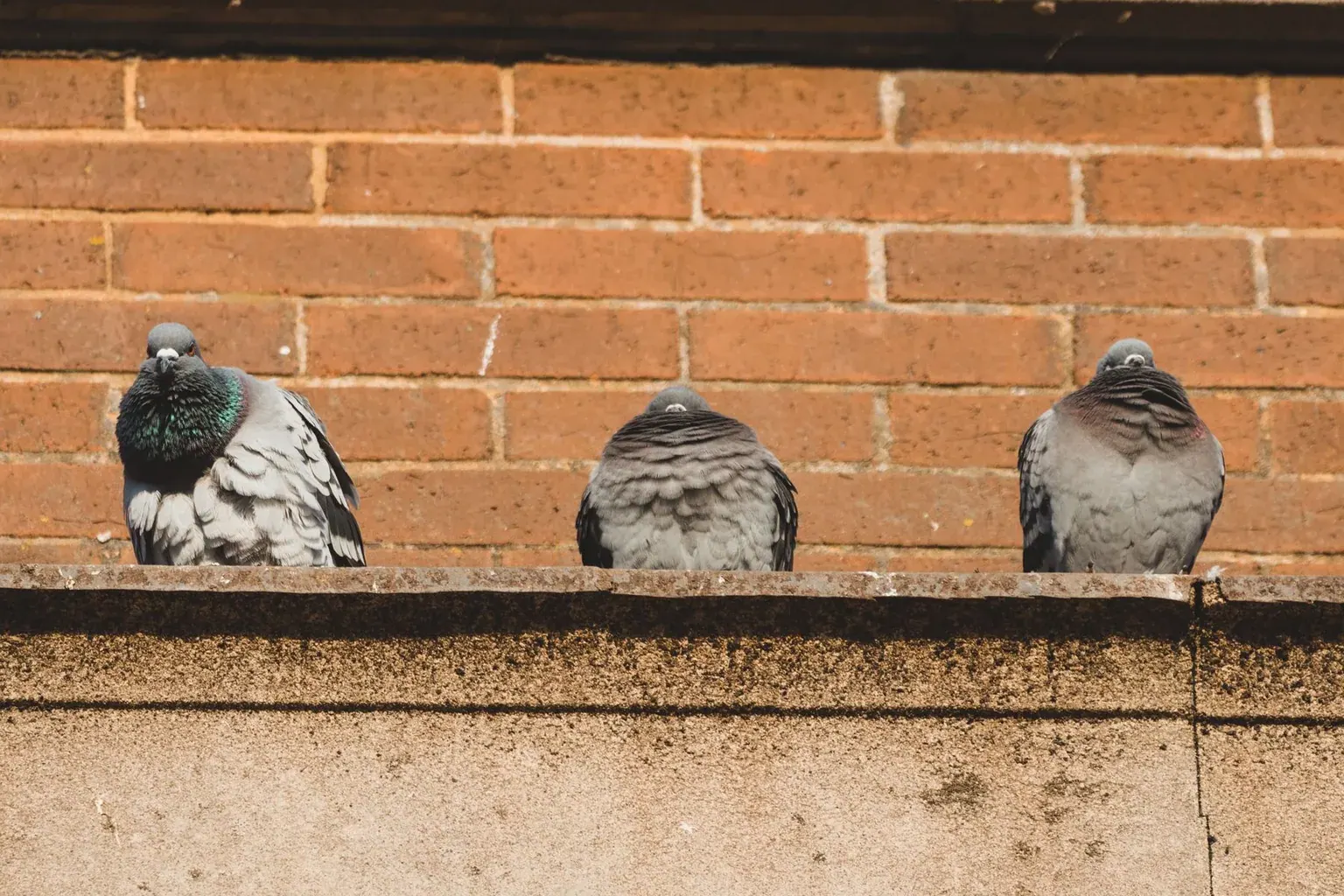
Feral pigeons, house sparrows and European starlings are the birds most often causing trouble in New York City homes. They roost on ledges and fire escapes, nest in air-conditioner housings, cornices and vents, and leave droppings on terraces, windowsills and walkways. Feeding birds from windows or terraces draws more of them and is the most common reason a problem keeps returning.
Other wild birds are protected by law, and their active nests cannot be disturbed. We identify the species before work begins, and we recommend the approach that fits the bird, the building and any rules that apply to it, such as landmark or co-op requirements for facade work.
WHERE WE SEE BIRDS IN NYC.
Pigeons favor building ledges, window air conditioners, fire escapes and the structures under elevated rail lines, which makes terraces and facades in Manhattan, Brooklyn, Queens and the Bronx the most common places we are asked to help. Sparrows and starlings are more often found in vents, signs and eaves on houses and low-rise buildings.
We look at how birds use the property before recommending any product.
STEP 01
INSPECT & IDENTIFY
We identify the species, find roosting, perching and nesting spots and note droppings accumulation, entry gaps and food sources.
Tell us when birds appear and whether anyone feeds them.
STEP 02
EXCLUDE & DETER
We install physical barriers where birds land and nest, and clean or recommend clean-up of affected areas before installation.
The aim is to make the spot unusable, not to harm the birds.
STEP 03
REVIEW & ADJUST
We check the installation and watch for birds moving to a nearby spot, then adjust deterrents or extend coverage as needed.
Birds test new barriers. A second look matters.
HUMANE METHODS. MATCHED TO THE BIRD.
Physical exclusion works best, with deterrents supporting it.
01
Netting and screening
Bird netting closes off recesses, balconies, under-deck spaces and vents so birds cannot enter or nest. Screens and covers fit air-conditioner housings, vents and chimney openings.
Installation must be tight at every edge; gaps trap birds and defeat the purpose.
02
Spikes, slopes and tension wire
Bird spikes, slope panels and low-profile tension wire make ledges, railings and sills hard to land on without harming birds. They suit narrow perches such as signs, cornices and parapets.
Spikes are not a fix for wide flat areas, where netting is the better choice.
03
Deterrents and habit changes
Visual and sound deterrents can help briefly, but birds adapt, so we use them only alongside barriers. Stopping feeding and securing trash removes the reason birds visit.
KNOW THE SIGNS. WHAT BIRD ACTIVITY LEAVES.
These signs show where birds roost and nest.
Droppings and staining
White streaks on ledges, railings, window air conditioners and below perches mark regular roosting spots.
Nesting material
Twigs, grass, feathers and debris in vents, gutters, sign frames or air-conditioner housings.
Noise at dawn
Cooing, scratching or chirping inside vents, soffits or cornices before sunrise suggests nesting in a cavity.
Damage to surfaces
Droppings are acidic and can mark paint, stone and metal, and they can block gutters and drains.
YOUR PART. BEFORE AND AFTER THE VISIT.
Safe clean-up and good habits protect the work.
Stop feeding
Do not feed birds from windows, terraces or roofs. It concentrates them and undermines any deterrent.
Do not sweep dry droppings
Dry droppings can carry organisms that cause respiratory illness when dust is inhaled. Dampen them first, wear gloves and a mask and bag the waste, or let us advise on clean-up for larger deposits.
Secure food and trash
Close trash bins and clear spilled food, pet food and seed from outdoor spaces.
Check with your building
Co-ops, condo boards and landlords often must approve installations on facades, fire escapes and shared terraces.
YOUR QUESTIONS. CLEAR ANSWERS.
Do you use poison for birds?
No. We do not poison birds. Control relies on exclusion, deterrents, habitat changes and sanitation, which are safer for people, pets and other wildlife.
Can you remove a nest with eggs?
It depends on the species. Pigeons, house sparrows and starlings are not protected in the same way as native wild birds, but we confirm the species first. Active nests of protected birds cannot be disturbed.
Are bird droppings a health risk?
Large accumulations of dry droppings can carry organisms that cause respiratory illness when disturbed. Light, occasional droppings are an inconvenience, but wet cleaning with gloves and a mask is the careful approach, and heavy deposits need professional clean-up.
Why do birds keep returning to the same spot?
Birds are creatures of habit and return to places that offer shelter and food. A partial barrier often just moves them a few feet. A complete installation, plus ending feeding, gives lasting results.
Will bird netting harm the building?
Properly installed netting attaches to hardware or cables and avoids damaging masonry. For landmarked or older masonry, we plan fixings with your building representative.
READY FOR THE VISIT? START HERE.
A little information helps us plan the assessment. Before treatment, we will give you preparation instructions for your home.
Describe the birds and spot
Share the type of bird, where they land or nest and when you see them. Photos help.
Note building access
Tell us about fire escapes, roof access, terraces or air conditioners, and whether the area is shared.
Mention any feeding
Let us know if anyone nearby feeds the birds so the plan accounts for it.