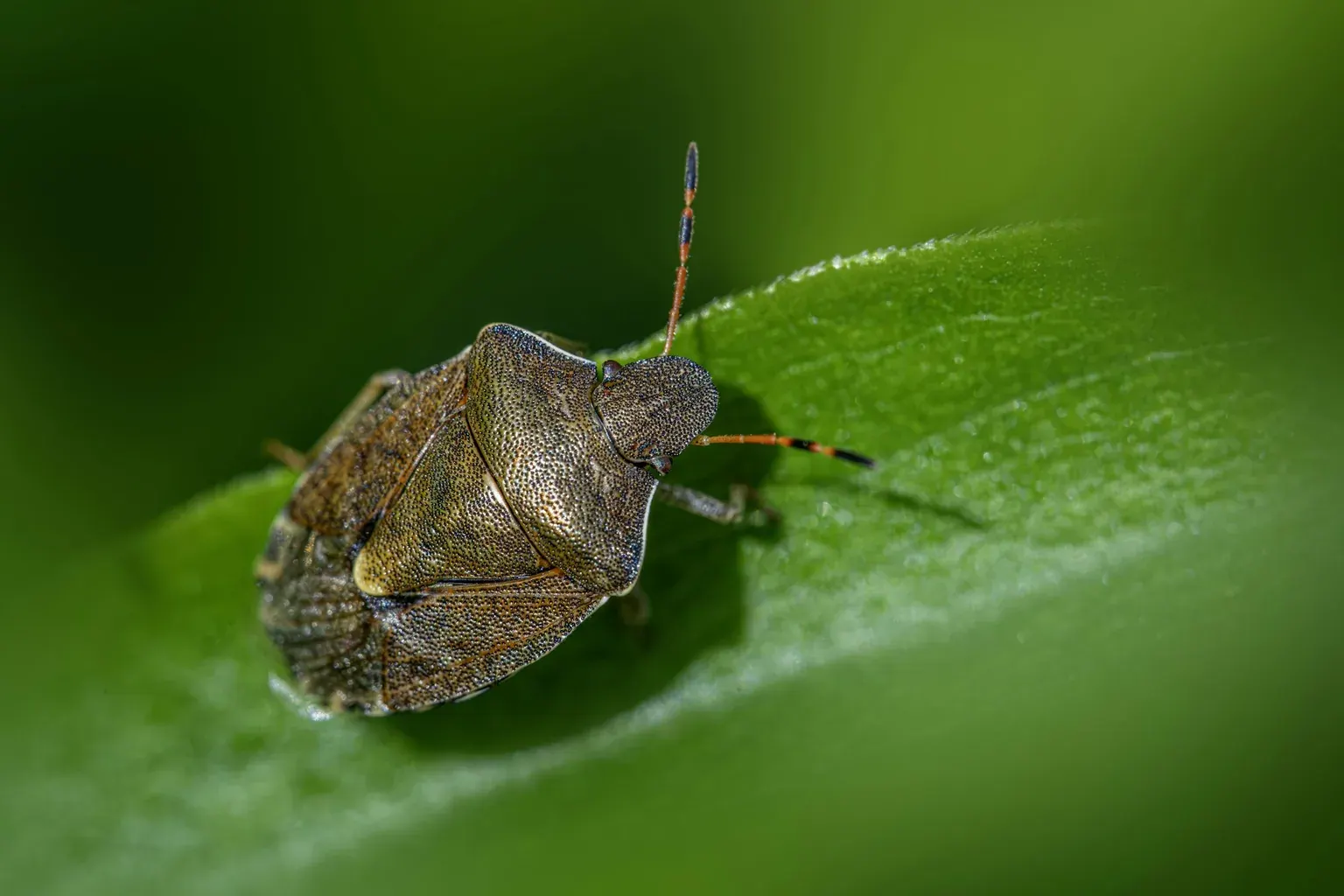
Fall invaders in Staten Island, Queens and the Bronx.
For New York City houses and apartments where stink bugs gather at windows in fall. A plan built around keeping them outside.
STINK BUGS INSIDE? IT IS ABOUT OVERWINTERING.
They are not looking for food. They are looking for a protected place to wait out the winter.
The brown marmorated stink bug is a shield-shaped, mottled brown insect about the size of a thumbnail. In early fall, adults leave gardens and trees and gather on sunny walls, window frames and roofs, then crawl into cracks around windows, siding, attic vents and utility lines to overwinter.
Indoors they stay mostly inactive through cold months and become active on warm days or when the heating comes on, which is why you see them at windows and lamps in winter and early spring. They do not breed in the home, bite or damage the structure, but they release an unpleasant odor when disturbed or crushed.
WHERE WE SEE STINK BUGS IN NYC.
Brown marmorated stink bugs gather on sunny walls in early fall and look for gaps to overwinter. Detached homes near trees and gardens on Staten Island, in Queens and in the northern Bronx are the most common calls. In multifamily buildings the activity is usually at upper-floor windows and sills.
The work is mostly exclusion, timed for late summer and early fall when possible.
STEP 01
INSPECT ENTRY POINTS
We check the sunny sides of the building, windows, doors, siding, soffits, vents, utility penetrations and attic or roofline access.
Tell us which rooms and windows they appear in.
STEP 02
SEAL & REMOVE
We recommend and, where appropriate, carry out sealing, screening and exterior treatment, and vacuum or collect those already inside.
Sealing is most effective before they come in, usually late summer.
STEP 03
FOLLOW UP
We review remaining activity after the first cold weeks and again in spring, and adjust exclusion where entries were missed.
Spring emergence from wall voids is expected, so exclusion is revisited before the next fall.
TARGET THE PROBLEM. CHOOSE THE APPROACH.
Exclusion does more than spraying once they are inside walls.
01
Exterior sealing and screening
Caulking cracks around windows, siding, utility penetrations and trim, repairing screens and installing door sweeps. Gaps as thin as a credit card are enough for stink bugs to enter.
Large openings may need a building-management or contractor repair.
02
Exterior perimeter treatment
A residual product applied to sunny exterior walls, windows and eaves in early fall, where they gather, according to the label and the building.
Timing matters more than quantity.
03
Vacuum collection indoors
Vacuuming individual stink bugs and discarding the bag or emptying it outside avoids the odor. Treating wall voids inside is not generally recommended, since dead insects can attract other pests.
Do not use indoor aerosols for stink bugs in wall voids.
KNOW THE SIGNS. WHAT TO LOOK FOR.
The pattern follows the season and the sun.
Clusters on sunny walls
Groups of brown, shield-shaped insects on south and west walls, window frames and roofs in early fall.
Insects at windows and lights
Slow, clumsy flyers near lamps, windows and curtains on warm winter days or in spring.
A sweet or pungent odor
A noticeable smell when one is crushed or disturbed against a surface.
Insects in attics and upper floors
Groups gathering in attic spaces, top-floor window sills and around vent covers.
YOUR PART. BEFORE AND AFTER THE VISIT.
A few steps keep the home sealed and the cleanup simple.
Vacuum or sweep into soapy water
Use a vacuum with a bag you can empty outdoors, or sweep them into a container of soapy water. Avoid squashing them.
Check screens and seals
Repair torn screens, fix loose weatherstripping and close gaps around air conditioners and windows before September.
Reduce outdoor harborage
Move firewood, plant debris and stacked items away from walls where possible.
Avoid sealing live insects in
Do not seal walls where bugs have already entered. Remove them first, then close the openings.
YOUR QUESTIONS. CLEAR ANSWERS.
Are stink bugs harmful?
They do not bite, sting or damage buildings, and they do not reproduce indoors. They are a nuisance because of their numbers and odor. People with sensitivities may react to the odor or to contact.
Why shouldn't I squash them?
Crushing releases the defensive odor, which can linger on fabric and walls. Vacuuming or sweeping them into soapy water is cleaner.
When is the best time to act?
Late summer and early fall, before the insects start moving indoors. Treatment and sealing afterwards still help, but fewer will be kept out.
Do they spread through apartment buildings?
They can move between units through shared voids and window frames. Coordination with building management helps when many units are affected.
READY FOR THE VISIT? START HERE.
A little information helps us plan the inspection. Before treatment, we give you preparation instructions for your home.
Tell us where you see them
Share the windows, rooms and floors, and whether they appear in fall, winter or spring.
Describe the building
Mention whether it is a house, brownstone or apartment building and whether you have an attic or top floor.
Skip indoor aerosols
Aerosol sprays do not remove stink bugs from wall voids. Ask us before applying anything.