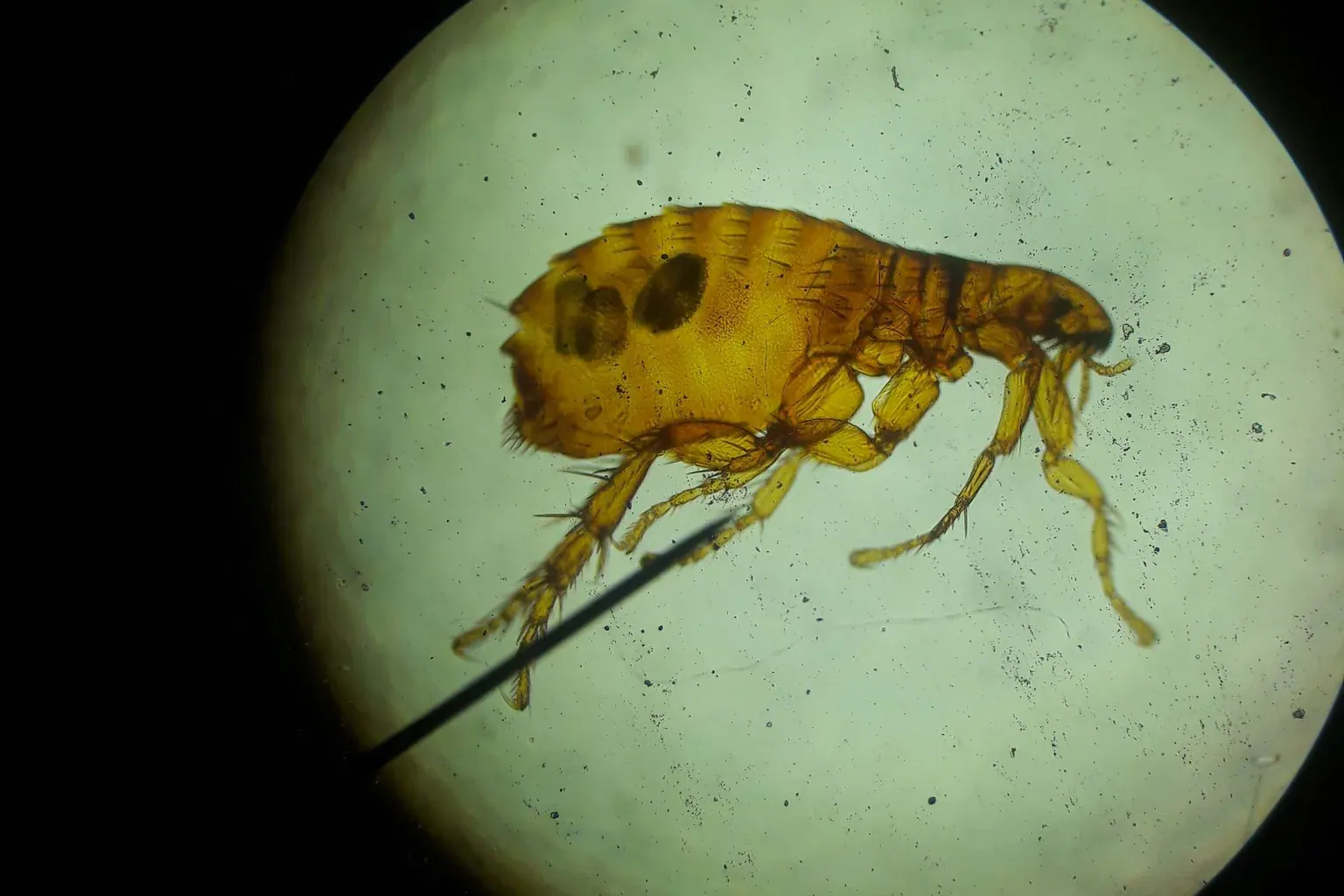
For New York City apartments, houses and shared buildings. Fleas live in carpets and bedding as well as on pets, so the home and the animal both need a plan.
FLEAS AT HOME? ADULTS ARE ONLY PART OF IT.
Most of a flea population is in the home, not on the pet.
Cat fleas are the common flea in New York City homes, even on dogs. Adults bite and feed on blood, but the eggs, larvae and pupae are in carpets, upholstery, pet bedding and floor cracks. Pupae sit in protective cocoons and can wait for weeks or months until vibration, warmth or a host triggers them to emerge, which is why fleas can appear in an apparently empty or newly occupied apartment.
Fleas can arrive on a pet, on visiting animals, on used furniture or from a previous resident, and occasionally from wildlife in basements and yards. Bites cluster around ankles and lower legs, and are often confused with bed bug bites, so we confirm the pest before treating.
WHERE WE SEE FLEAS IN NYC.
Fleas follow pets, and also wildlife that visits yards, so single-family homes with outdoor space on Staten Island and in Queens see them regularly. In apartments across Manhattan, Brooklyn and the Bronx an infestation often starts after a move-in, a new pet or a stay in a unit that was vacant.
Several steps work together because each life stage needs a different approach.
STEP 01
INSPECT & CONFIRM
We confirm fleas with a flea comb or white-sock test and look at pet resting spots, carpets, floor edges and upholstery where larvae gather.
Tell us about pets, where they sleep and when bites started.
STEP 02
TREAT & VACUUM
We apply a labeled adulticide with an insect growth regulator to infested areas, with thorough vacuuming ahead of it to lift eggs and larvae.
Pets must be treated by a veterinarian-recommended product at the same time.
STEP 03
FOLLOW UP
We return after the pupae have had time to emerge, check for activity and repeat targeted treatment where needed.
Fleas emerging after treatment are expected and are why follow-up matters.
TARGET THE LIFE CYCLE. CHOOSE THE APPROACH.
The most effective plans combine treatment, vacuuming and pet care.
01
Vacuuming and laundering
Frequent vacuuming of carpets, rugs, furniture seams and floor edges removes eggs and larvae and stimulates pupae to emerge so they are exposed to treatment. Pet bedding and fabrics washed hot and dried on high heat kill all stages.
Seal and remove vacuum bag contents outdoors after each use.
02
Adulticide with insect growth regulator
A labeled residual product kills emerging adults, while an insect growth regulator stops eggs and larvae from developing. Together they cover the life cycle that a plain adulticide misses.
Re-entry times and preparation instructions come with the written service notes.
03
Pet and yard coordination
Pets should be treated by their veterinarian or an approved product at the same time. If fleas come from the yard, shaded resting spots or basement wildlife, we recommend steps for those areas.
KNOW THE SIGNS. HOW FLEAS SHOW UP.
These signs point to fleas, not other biting insects.
Bites around ankles
Small, itchy red bumps on ankles and lower legs, often in clusters, especially after time on carpet or upholstery.
Flea dirt
Tiny dark specks on pet bedding or carpet that turn reddish-brown when placed on damp white paper are flea feces.
Jumping insects
Dark, fast, jumping insects on white socks, pets or pale floors.
Pet scratching
Frequent scratching, biting or restlessness in a cat or dog suggests fleas.
YOUR PART. BEFORE AND AFTER THE VISIT.
Preparation makes the treatment reach every life stage.
Treat your pets
Ask your veterinarian for an appropriate flea product and use it on every pet in the home on the same schedule.
Wash and vacuum
Wash bedding and soft furnishings on a hot cycle and vacuum carpets, rugs and upholstery before we arrive.
Clear the floor
Pick up clothes, toys and objects so treatment reaches floor edges and under furniture.
Follow re-entry guidance
Our written instructions explain how long people and pets should stay out of treated areas and how to resume vacuuming.
YOUR QUESTIONS. CLEAR ANSWERS.
Why am I seeing fleas after treatment?
Pupae are protected inside cocoons and emerge over several weeks. Newly emerged fleas die once they contact the treated surface. Vacuuming helps by encouraging emergence. We schedule a follow-up for exactly this reason.
I have no pets. Can I still have fleas?
Yes. Fleas can remain from previous occupants, arrive on visitors or enter from basements and yards. We inspect to confirm the source and treat the home as a whole.
Are flea bites dangerous?
For most people they are itchy but harmless, though scratching can lead to skin infection and some people react strongly. Speak to a doctor if bites are severe, and to a veterinarian about your pets.
Can I just use a store-bought flea bomb?
Foggers often miss the places where larvae live, such as under furniture and within carpet fibers, and they can scatter fleas. A targeted treatment with vacuuming and an insect growth regulator reaches the life cycle more reliably.
How long does it take to be flea-free?
Because of the pupal stage, it commonly takes several weeks. Following the vacuuming and pet-treatment instructions shortens it, and we confirm results at a follow-up visit.
READY FOR THE VISIT? START HERE.
A little information helps us plan the assessment. Before treatment, we will give you preparation instructions for your home.
Tell us about your pets
Share how many cats or dogs you have, where they sleep and whether they are on a veterinary flea product.
Describe the bites
Note where on the body and when bites started, and whether anyone else in the home has them.
Share what you have seen
Photos of insects or specks on bedding or carpet help confirm that it is fleas.